Finding a reliable HVAC Company Near Me shouldn’t feel like guesswork. You want qualified technicians who respond quickly, diagnose accurately, and fix the problem without unnecessary upsells. Look for local pros with strong reviews, clear pricing, and the licenses or certifications that match the service you need, so your system runs safely and efficiently.
This article breaks down essential HVAC services so you know what to expect from repairs, maintenance, and replacements, and it shows how to evaluate contractors on experience, warranties, and customer feedback. Use these practical criteria to narrow choices, compare quotes, and pick a professional who protects your comfort and your budget.
Essential HVAC Services Explained
You’ll learn which HVAC services protect comfort, control costs, and improve indoor air. Each service targets specific problems: heating systems, cooling systems, and air quality improvements.
Heating Solutions for Residential and Commercial Properties
You need reliable heating that matches building size and occupancy. Technicians assess load requirements, then recommend furnaces, boilers, or heat pumps sized to your square footage and insulation levels. For older systems, they’ll test heat exchangers, gas pressure, and venting to identify safety or efficiency issues.
Maintenance tasks include filter replacement, burner cleaning, thermostat calibration, and combustion analysis. These steps lower fuel use and prevent midwinter failures. For commercial properties, techs also inspect ductwork, zone controls, and boiler water chemistry to avoid uneven heating and costly downtime.
Emergency repair services cover ignition failures, pilot issues, and compressor or blower motor faults. When replacement is needed, expect written estimates comparing equipment efficiency ratings (AFUE for furnaces, HSPF/SEER for heat pumps) and projected operating costs.
Air Conditioning Installation and Repair
You should match AC capacity to cooling load, not just room count. Professionals perform Manual J or equivalent calculations to size condensers and evaporator coils, ensuring correct refrigerant charge and airflow. Proper sizing prevents short cycling, humidity problems, and premature component wear.
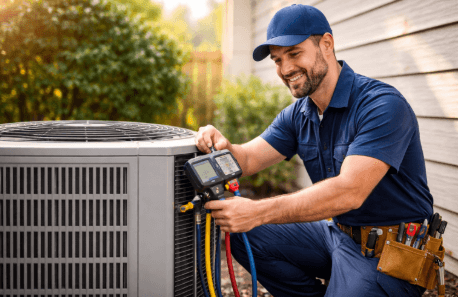
Common repairs include refrigerant leaks, compressor failures, capacitor and contactor replacements, and clogged condensate drains. Technicians use recovery equipment and leak-detection tools to comply with refrigerant regulations and protect system longevity.
Routine tune-ups cover coil cleaning, fan motor lubrication, electrical connection checks, and verifying thermostat accuracy. If you’re replacing a unit, compare SEER ratings and look for variable-speed compressors or multi-stage systems to improve comfort and reduce peak electricity use.
Indoor Air Quality Enhancements
You can reduce pollutants with targeted IAQ solutions based on source and symptoms. Start with high-efficiency filters (MERV 8–13) to capture dust and pollen; upgrade to HEPA or electrostatic options if occupants have allergies. Technicians may also recommend UV-C lamps to inhibit microbial growth on coils and in drain pans.
Whole-home ventilation and energy-recovery ventilators (ERVs) balance fresh air intake with energy conservation. For homes with persistent odors or VOC concerns, activated carbon filters or dedicated air cleaners address gases that particulate filters miss.
Professionals perform duct cleaning, sealing, and pressure testing to eliminate dust, mold spores, and airflow leaks. They’ll present measurable options—filter MERV ratings, CADR values, or expected reduction in particulate counts—so you can choose solutions that match your indoor air priorities.
Selecting the Right Professionals
Focus on credentials that prove technical skill and experience with systems like central air, ductless mini-splits, and furnace replacements. Also check real customer feedback for punctuality, warranty fulfillment, and clear pricing.
Certifications and Experience to Consider
Look for technicians with EPA Section 608 certification for refrigerant handling and state contractor licenses required in your area. These credentials show legal compliance and basic technical training.
Prioritize companies with manufacturer certifications (e.g., Trane, Lennox, Carrier) when you need a specific brand’s installation or warranty work. Manufacturer training reduces installation errors and preserves factory warranties.
Ask how long the company has worked on systems like yours and request examples of recent similar jobs. Prefer teams that provide written estimates, parts lists, and clear warranties (labor and parts). Verify insurance and worker’s compensation before work begins.
See also: Home Backup Power Solutions Using Solar Generators
Comparing Reviews and Customer Satisfaction
Read multiple review sources—Google, Yelp, and industry lists—to spot consistent patterns about timeliness, cleanup, and follow-up service. A single bad review matters less than repeated complaints about the same issue.
Pay attention to responses from the company on negative reviews; professional, remedial replies indicate accountability. Look for reviews that mention exact job details (model numbers, scope, dates) because they’re usually more reliable.
Use a short checklist when comparing providers:
- Response time for estimates and emergency calls
- Clarity of written estimate and scope of work
- Warranty terms for labor and parts
- References or photos of completed jobs
Request at least three written bids and compare line-item costs before deciding.