You rely on accurate, well-maintained equipment to get reliable results and keep your work efficient and safe. Focus on choosing the right tools and keeping them calibrated and serviced so your experiments, diagnostics, or production run smoothly and produce trustworthy data.
This article will walk you through what modern scientific equipment does, how to compare options, and practical upkeep steps that save time and money. Expect clear guidance on selecting instruments, basic maintenance practices, and where to look for trusted suppliers and support.
Overview of Scientific Equipment
Scientific equipment covers instruments for measuring, preparing, analyzing, and storing samples, plus safety and data systems. You need instruments matched to your technique, validated performance, and proper maintenance to keep results reliable.
Categories of Scientific Equipment
You will typically divide equipment by function: measurement, sample handling, analysis, and support. Measurement tools include balances, pipettes, spectrophotometers, and data loggers used to collect quantitative data.
Sample-handling items cover centrifuges, incubators, ovens, and cryogenic freezers that control temperature, force, or environment for specimens.
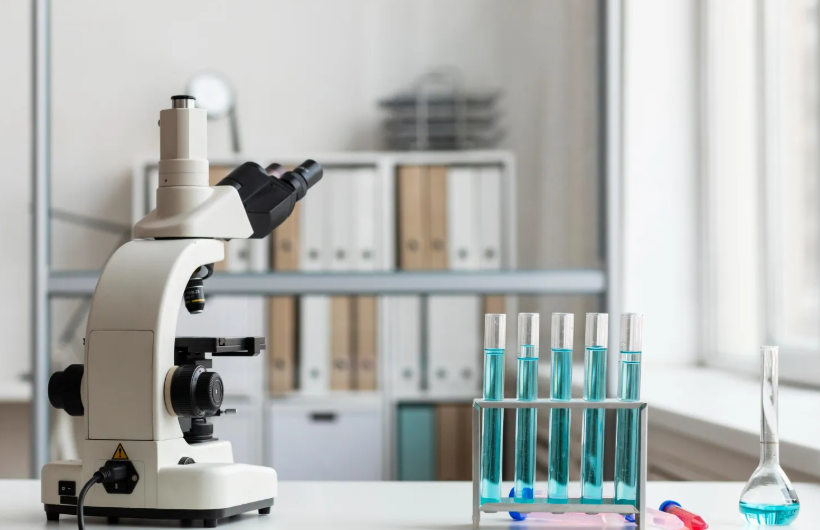
Analysis instruments involve microscopes, chromatographs (GC/LC), mass spectrometers, and PCR machines that identify composition or structure.
Support and safety gear includes fume hoods, biosafety cabinets, personal protective equipment (PPE), and LIMS/software for tracking samples and results.
Key Functions and Applications
Focus on what each device accomplishes and where it fits in workflows. You use balances and pipettes for precise dosing and reproducible reagent preparation.
Chromatography and mass spectrometry separate and quantify compounds in chemical, environmental, and clinical analyses. Microscopy and imaging reveal morphology at scales from millimeters to nanometers.
Incubators and bioreactors control growth conditions for cell culture or fermentation. Fume hoods and biosafety cabinets protect you and your samples during hazardous or sterile procedures.
Data acquisition hardware and laboratory software capture, store, and validate measurements for compliance and traceability.
Essential Features to Consider
Assess accuracy, precision, range, and resolution specific to your assays. Accuracy and calibration frequency determine whether an instrument meets method validation requirements.
Check throughput, sample capacity, and runtime to match your laboratory’s workload. Consider scalability, automation options, and compatibility with existing software or consumables.
Evaluate maintenance needs, mean time between failures (MTBF), and availability of service contracts and spare parts. Prioritize safety certifications (e.g., CE, UL) and documentation like IQ/OQ/PQ for regulated environments.
Factor in total cost of ownership: purchase price, consumables, calibration, and energy use.
Maintaining and Selecting Scientific Equipment
You will prioritize cost, functionality, safety, and long-term serviceability when choosing instruments. You must establish a written calibration and maintenance plan tied to performance specifications and regulatory requirements.
Selection Criteria for Laboratories
When selecting equipment, match specifications to your primary assays. List required sensitivity, throughput, sample volume, and compatible consumables; reject instruments that need bespoke consumables you cannot reliably source. Evaluate accuracy and precision data from vendor validation reports and request raw datasets or third-party validation when possible.
Factor total cost of ownership: purchase price, annual service contracts, spare parts lead time, and expected mean time between failures (MTBF). Confirm electrical, footprint, and HVAC requirements with facilities before procurement to avoid installation delays. Prioritize modular designs if you anticipate method changes, and choose vendors with local service technicians and documented parts availability.
Use a simple vendor scoring table:
- Technical fit (30%)
- Cost of ownership (25%)
- Service/support (20%)
- Consumables/logistics (15%)
- Compliance/documentation (10%)
See also: Online Psychotherapy: Evidence-Based Strategies for Effective Virtual Mental Health Care
Calibration and Maintenance Best Practices
Create a written schedule with calibration intervals tied to manufacturer specs and method risk. Calibrate critical measurement points (e.g., temperature blocks, pipette volumes, spectrometer wavelength) before validation runs and after repairs. Keep certificate copies, calibration dates, standards used, and technician initials in both digital and hardcopy logs.
Implement daily functional checks for routine use items and preventive maintenance tasks weekly or monthly depending on workload. Use traceable standards and reference materials with known uncertainty. Train and credential staff who perform calibrations; segregate duties so the operator isn’t the only person responsible for maintenance records.
Automate reminders with your LIMS or CMMS and audit the log quarterly. Track trends (drift, repeated failures) and escalate to vendor service when corrections exceed predefined limits.
Safety Standards and Compliance
Identify applicable standards (e.g., ISO, ASTM, CLIA, GLP) for each device and document how the instrument meets those requirements. Maintain device-specific SOPs that cover safe operation, decontamination, PPE, and emergency shutdown. Require competency signoff before independent use.
Ensure electrical grounding, exhaust, and biosafety cabinet placement meet building and biosafety codes. Keep maintenance records available for inspections and include calibration traceability to national standards where required. For high-risk devices, hold periodic safety drills and failover tests to confirm emergency procedures work and that backup instruments can maintain critical operations.